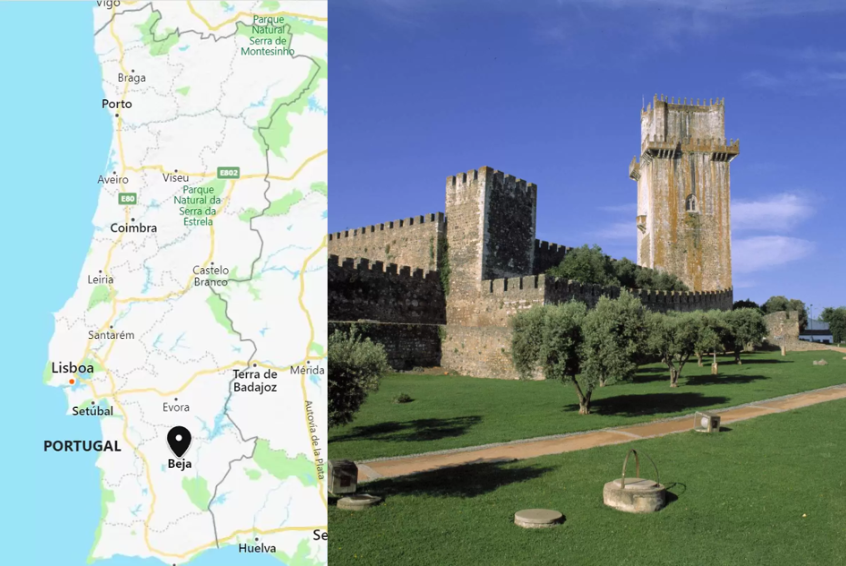
ARTeFACTo 2026 BEJA is the 5th International Conference on Digital Creation in Arts, Media and Technology, hosted by the Polytechnic Institute of Beja, in Beja, Portugal.
The conference promotes interest in digital/media culture and its link to art and technology as a key research area, with a focus on digital media/computer artefacts. It covers their design, creation, research, implementation, exhibition, and role in society. The event also aims to develop conceptual foundations for artefact theory in digital media.
EXPANDED (A)UDIOVISUAL (I)NTELLIGENCE
Authors are invited to submit papers and exhibition artwork proposals across all areas of creative digital art, with an emphasis on artefacts, art installations, and general-purpose interactive systems that embrace expanded audiovisual intelligence, i.e., the application of artificial intelligence in the creative process and exhibition of audiovisual artefacts. Both research and application papers are relevant to ARTeFACTo 2026 BEJA.
Artworks submitted for the exhibition must include a short paper (for pages) and a detailed descriptive video in HD MP4 format, lasting up to 4 minutes (with optional English subtitles). Please submit a permanent link (optionally private) to the descriptive video alongside the article. Please note that the conference will feature a virtual exhibition (audiovisual) of artworks only.
Topics of interest include (but are not limited to):
- AI and Art
- Art, Science and Sustainability
- Art and Science Theory
- Art and Technology
- Audio-Visual and Multimedia Design
- Biographical Narrative Artefacts
- Creativity Theory
- Design and Data Visualisation
- Digital Art Cultures
- Digital Dance & Body Poetics
- Digital Storytelling
- Digital Technologies and Making
- e-Learning in Art and Media Studies
- Electronic Music
- Expande Audiovisual Intelligence Artefacts
- Generative and Algorithmic Art & Design
- Gesture Interfaces
- Immersive Art
- Interactive Art
- Interactive Systems for Artistic Applications
- Interaction Design
- Interfaces
- Media Art History
- Web Art and Digital Culture
- Digital Media, Apps and eBooks
- Digital Preservation
- Postdigital Artefacts
- Praxis and Poesis
- STEAM Education
- Sustainability and Bioremediation Activism
- Tangible Interfaces
- Technology in Art Education
The International Scientific and Art Committee comprises experts from various disciplines. The conference program will consist of keynote addresses by eminent specialists/artists, oral presentations of contributed papers, a virtual art exhibition, and videos and posters of work in progress.
Authors of selected papers presented in the conference (including essays describing the best art installations) will be invited to submit extended versions to one of the following journals (under negotiation):
– ROTURA – Journal of Communication, Culture and Arts (ISSN: 2184-8661) (https://publicacoes.ciac.pt/index.php/rotura) (Scopus)
– Journal of Science and Technology of the Arts (ISSN: 1646-9798) (http://artes.ucp.pt/citarj) (Scopus)
– E-Journal of Intercultural Studies (ISSN:2182-6439) (https://www.iscap.pt/cei/e-rei/en.html) (Scopus)
– International Journal of Education through Art (ISSN: 1743-5234) (http://www.intellectbooks.co.uk/journals/view-Journal,id=121/ ) (Scopus)
– Poetics – Journal of Empirical Research on Culture, the Media and the Arts (ISSN: 0304-422X) (https://www.journals.elsevier.com/poetics) (Scopus)
Proceedings
It is under negotiation to publish the papers by ACM ICPS and have them available through ACM’s Digital Library and indexed in Scopus.
The submission of a paper or artwork implies the intention of at least one of the authors to register and attend the conference to perform a spoken presentation. Papers accepted and presented at the conference by one of the authors will appear in the conference proceedings. Artworks accepted for exhibition will be published in the conference proceedings, provided that the authors submit an appropriate short paper description for each artwork.
Note that the conference requires face-to-face participation, so remote presentations of papers will be allowed only in justified cases.
We aim to have the accepted papers be published in the ACM’s Digital Library and indexed in Scopus. As an alternative, independent researchers and artists can have their papers published open access at Zenodo.